
Philips Semiconductors : Southampton Chips
Southampton Chips
- “Compact Disc and Digital Compact Cassette chips are designed in Southampton.”
- “But Philips are a Dutch company.”
- “Yes, sure. But UK engineers in Philips Components help develop the chips here.”
This casual interchange over the telephone surprised me.How come I’ve had to get up at 6 a.m. to catch a noisy, wave hopping (and seriously misnamed) Fokker Friendship that made ne regret ever having looked at a breakfast, to get to Halland when the answers to my questions could have been gathered with a telephone call or, at worst, a train jourrey to the seaside?
Wrong! This is a multinational company. The people I have visited in Holland were Philips Electrical, those who make the final gizmos. They use silicon chips and specialist parts supplied by their Component division, a branch of which exists in Southampton. It’s these guys who have been working on DCC for some time, since obviously, the chip sets come before the final product. We organised a visit.
Not faced with a grey and turbulent English Channel to cross, a 10 a.m. start and a lazy drive down the M3 in the sun was in order. We even had time to sit down and have a coffee by the waterside, watching the ferries weave in and out and contemplating a life as captain of one. Looks great when the Prilips’ Southampton branch went for many years under the name of Mullard, the company set up by Captain
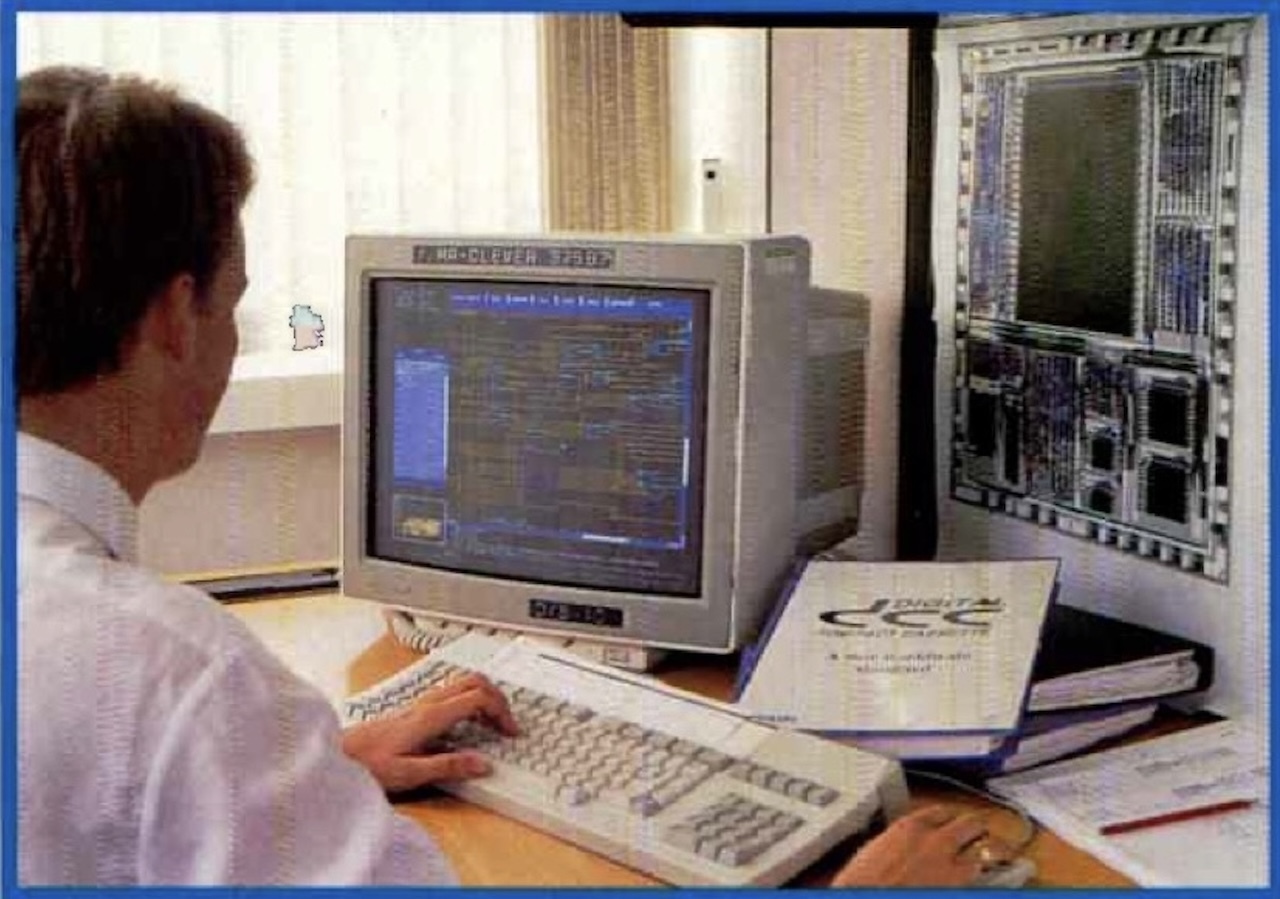
A member of Philips CAD/CAM design team, working on the layout of a new chip.
Stanley Mullard in Hammersmith back in 1920 to make thermionic valves for radios. Philips had a financial interest from 1925 and bought it outright in 1927, but kept a low profile (to avoid stirring up zenophobia about a British company being foreign-owned) until
1938. It seems even the Inland Revenue didn’t realise, for they wanted to know why Mullard himself (who became Managing Director) wasn’t declaring dividends from shares which in fact Philips now owned. Throughout most of the period, Mullard valves were actually assembled from Philips components.
Until 1939, in fact, it was said that the only British part of a Mullard valve was the vacuum inside it! The link to Philips’ main centre in Eindhoven goes back sixty-seven years, from the day in 1925 when the Dutch replaced Mullard’s ‘primitive’ machines with semi-auto-mated ones.
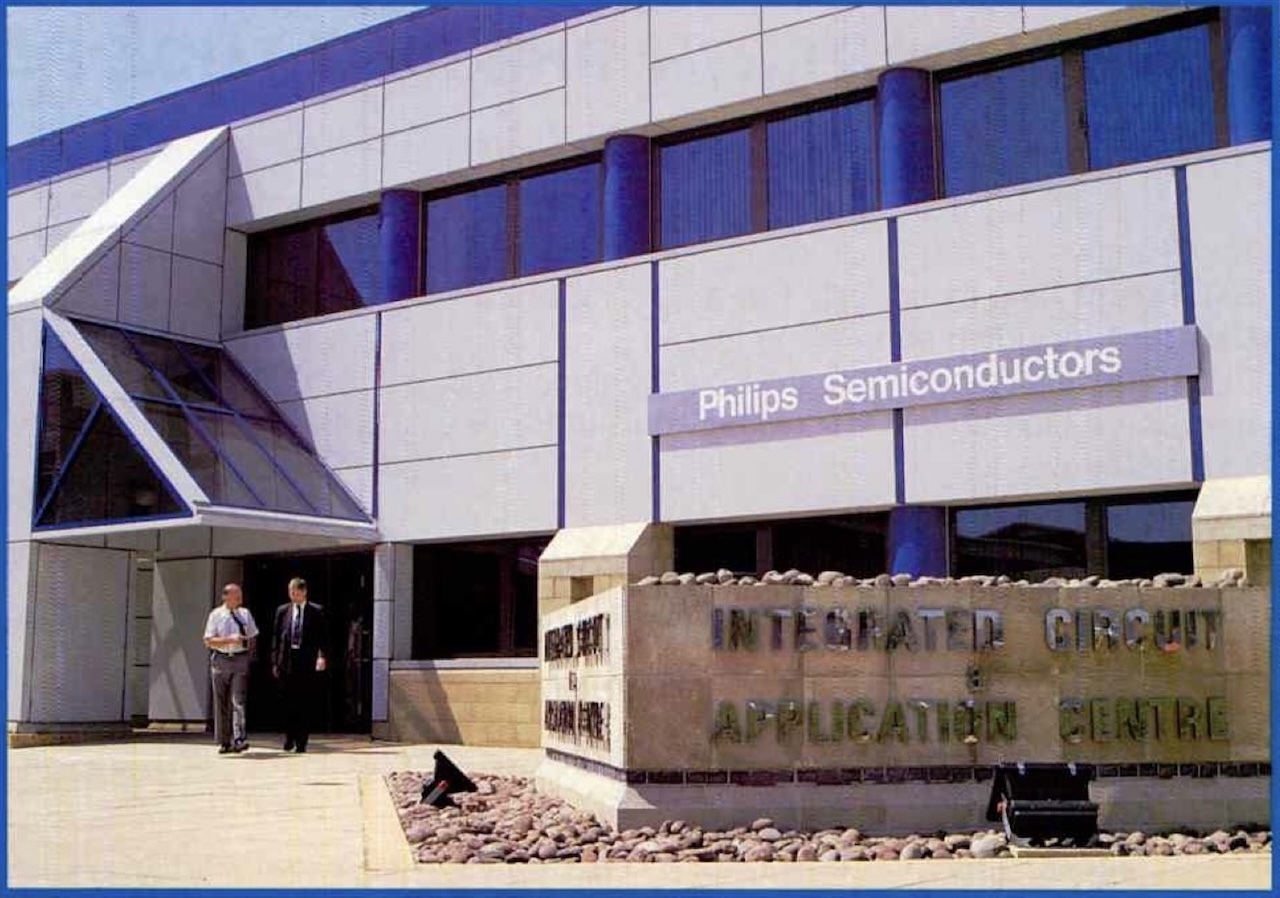
Although Philips (as Mullard) acquired the Southampton site in 1955, the modern building we visited went up in 1988 when Philips finally lost their reticence and re-named the business Philips Components. And, just as I was told, there in the entrance lobby was a wall display showing DCC parts, including the large scale integrated circuits developed at Southampton to a specification laid down, in the first instance, by the research labs at
Southampton Supports Although Southampton designs the ICs and develops support circuits, the chips are made (fabricated as they put it) in Nijmegen, Holland. Quite who decides to do what depended entirely upon the individual situation, we were told by Dave Slowgrove of the International Product Marketing Department.
“Sometimes the specification comes from Eindhoven, sometimes not. With the SAA-7350 [Bitstream] for example we set out to improve the earlier SAA-7320, but with DCC, which was a new technology, we worked with a specification from Eindhoven.”
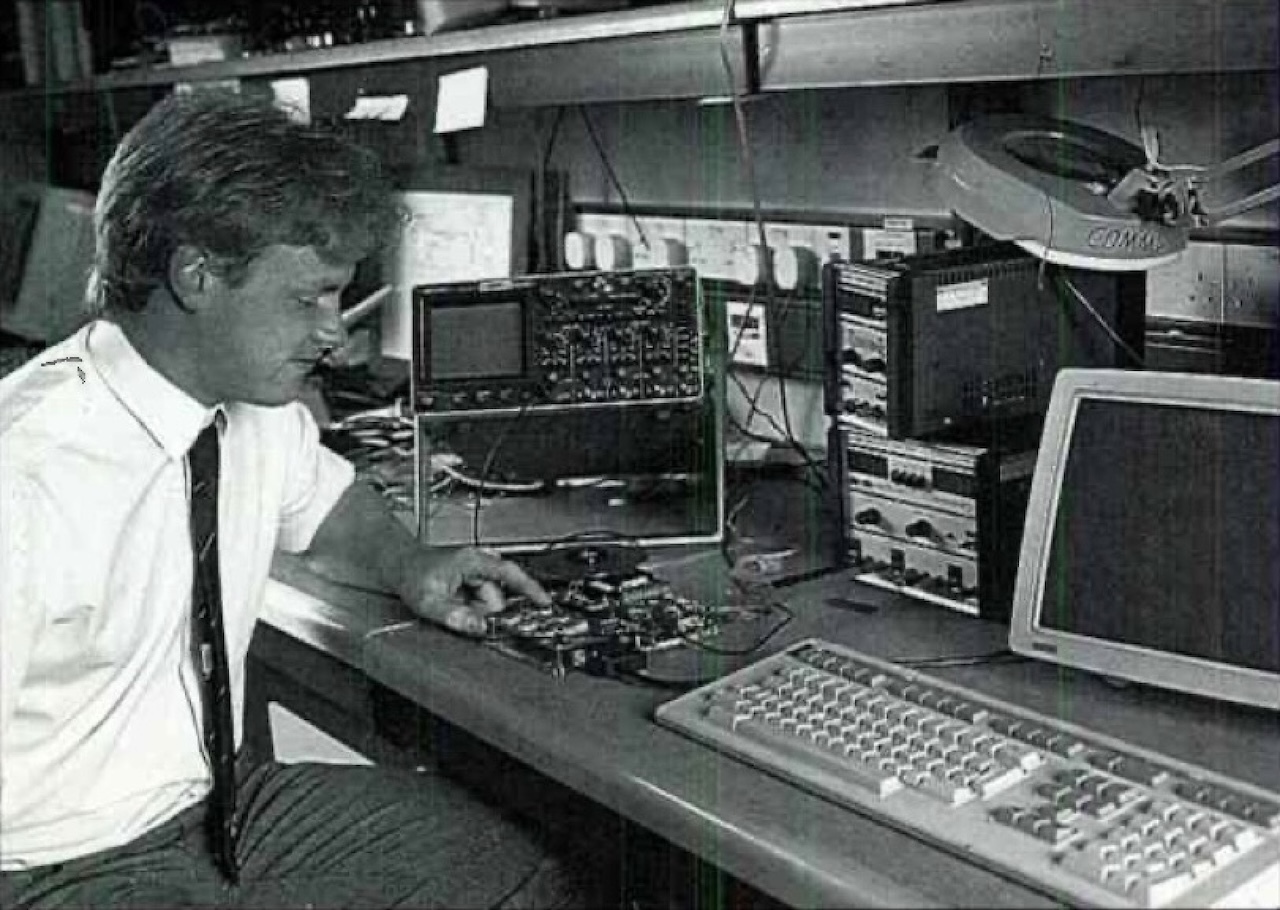
The TDA-7345 and TDA-1301 digital servo IC underscrutiny in conjunction with support circuits.
“With the SAA-7350 and the TDA- 1547 we were really trying to move forward from what we leamt from the 7320. Some people say they think the 7320 sounds better, but it does depend upon how you use them.”
Generally, chips from Southampton carry the SAA prefix; those from Nijmegen the TDA prefix. The TDA-1547 came out of Nijmegen too. It is this latter chip which Deltec use in the PDM-Two convertor. Both this and the 7350 are reckoned to be the best low-distortion Bitstream chips so far.
Another chip, destined for use in Digital Sound processors, offers two curious alternatives to the usual Church, Hall, or Concert Hall ambi-ence: a Bathroom sound (hmmm) and heaven help us! – a Cave. Would-be hermits and Thrash Metal Neanderthals look out. No-one seems yet to have spotted the intriguing fact that it also offers digital scratch suppression for analogue LPs for other primitives who still have black disc collections. Interested manufacturers can ask about the PCF5020/A.
“We have two new chips due out that both relate to hi-fi use. There is the new TDA-1307 eight times oversampling digital filter that has been designed to fit with the TDA-1547.” (TDA 1547 is known as ‘DAC7’, used among others by Meridian and Deltec for convertors and by Mission in their DAC5 which we reviewed last month.)
“It will improve the performance of the TDA1547, but it isn’t out till the end of the year (1992). This will provide manufacturers with a Bitstream chipset for CD that should give even better performance than that being achieved now.”
“Another new device is the Bitstream Analogue-to-Digital (ADC) device, the SAA-7360. Eventually, this will be used in DCC recorders to convert analogue sound into a digita . With Compact Disc, British top-end hi-fi manufacturers have done very respectably with niche products incorporating crucial parts designed and manufactured by Philips, notably the transport with its laser optics and the chip sets. The complexities of Compact Disc are well appreciated by British manufacturers, who these days are more speedy and imaginative in their implementation than most.
Anyone contacting Philips Components in Britain speaks to the men at Mullard House in London. And of course, all real power and decision making lies in Holland. Consequently, few people hear about the role Southampton plays in the development of some of the world’s most advanced digital hi-fi technology. NK
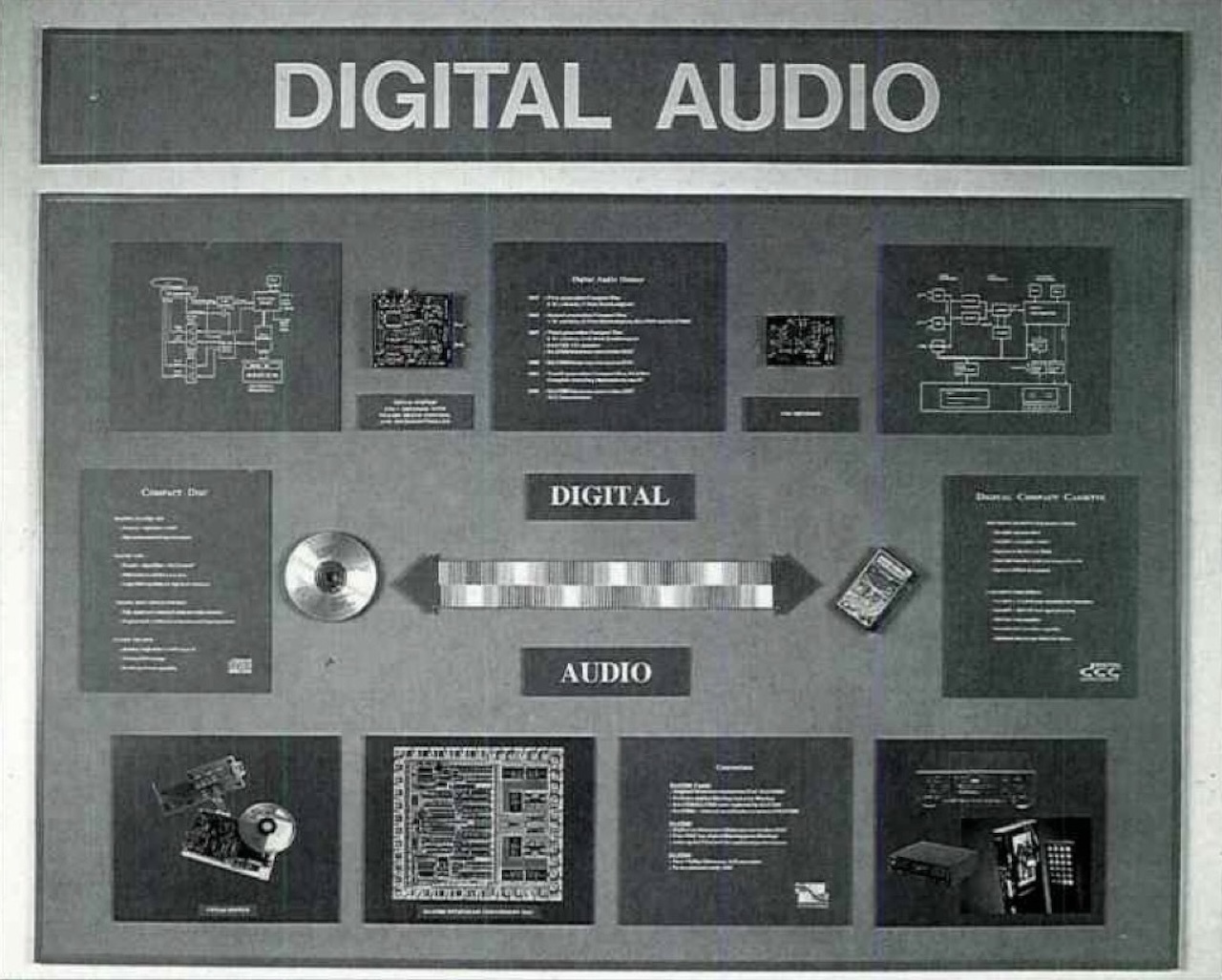
The history of Digital Audio, according to Philips in Southampton.
Source : Article Copyright : Hi-Fi-World-1992-08 44